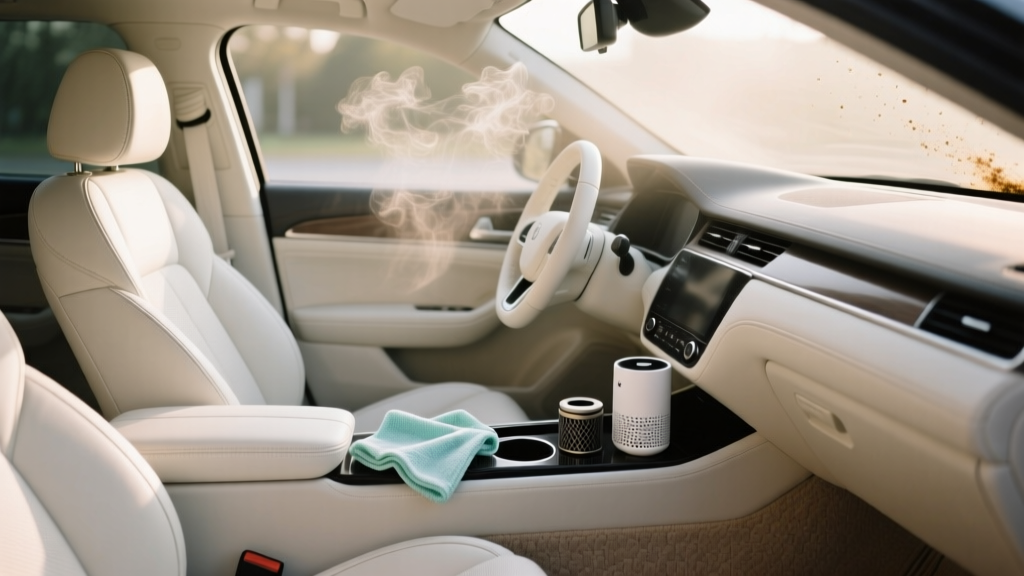
Cleaning for Smoke Odor Removal - CarInteriorMix
Cleaning for Smoke Odor Removal
Smoke smell in a car is one of those odors that doesn?t ?fade out? on its own. Cigarette and cigar smoke leave sticky residue (tar and nicotine) on headliners, seats, plastics, and inside the HVAC system?so even if you crack the windows, the smell hangs around and comes back stronger on hot days.
The good news: you can get serious results with targeted cleaning for smoke odor removal, not just air fresheners. The goal is to remove the residue that?s holding the odor, then neutralize what?s left in the air and ventilation system.
-
Start with a deep vacuum (and don?t skip the cracks)
Smoke particles settle into dust, and dust loves to hide under seats, between the center console and seats, and in seat-track channels. Use a crevice tool, slide seats all the way forward/back, and vacuum every seam and floor edge. Real-world tip: if your car smells worse after the heater runs, odds are the carpet padding and under-seat areas are loaded with smoky dust. -
Remove the source items: ashtray inserts, cabin air filter, and any porous accessories
Empty and wash removable ashtray inserts with hot soapy water, then wipe with isopropyl alcohol (test a small spot first). Replace the cabin air filter?this is one of the fastest wins for car smoke smell removal, and most filters are cheap (consider an activated charcoal cabin filter). If you?ve got a cloth steering wheel cover, old floor mats, or a fabric air freshener that?s been absorbing smoke, toss or replace it; otherwise you?re cleaning around the problem. -
Degrease hard surfaces to lift the smoke film
Smoke leaves a greasy layer on dashboards, door panels, and plastic trim that traps odor. Use an interior-safe APC (all-purpose cleaner) diluted properly (like Meguiar?s All Purpose Cleaner or Simple Green diluted?avoid soaking electronics), then wipe with clean microfiber towels until the towel stops picking up yellow/gray residue. Example: if your windshield hazes up quickly after cleaning, that film is still evaporating?keep wiping surfaces until they feel squeaky-clean, not slick. -
Clean the inside glass twice (smoke clings to it)
The inside of the windshield and windows can hold a surprising amount of smoke residue, and it?ll keep releasing odor when the car warms up. First pass: wipe with a damp microfiber and a tiny bit of interior cleaner to break the film. Second pass: use an ammonia-free automotive glass cleaner (like Stoner Invisible Glass) with a fresh towel for a streak-free finish?this alone can make the cabin smell noticeably fresher. -
Shampoo fabrics and carpets?then extract, don?t just ?wet-clean?
Cloth seats and carpeting act like sponges for smoke. Use a dedicated upholstery cleaner (Turtle Wax Power Out, Chemical Guys Fabric Clean) or a DIY mix of warm water + a few drops of gentle dish soap; agitate with a soft brush. The key is extraction: use a wet/dry shop vac or a portable extractor (like Bissell Little Green) to pull dirty moisture back out so odors don?t get pushed deeper into the padding. -
Headliner cleanup: go gentle to avoid sagging
The headliner is a top offender because smoke rises and sticks there, but it?s also easy to damage with too much liquid. Lightly mist a microfiber towel (not the headliner directly) with an upholstery-safe cleaner, then blot/wipe in small sections. If you scrub hard or soak it, you can loosen the adhesive and cause sagging?think ?light cleaning passes? instead of a heavy shampoo job. -
Attack the HVAC smell: vents, intake area, and disinfecting foam
If the smoke odor gets stronger when the fan runs, the smell is living in the ventilation system. Replace the cabin filter first, then run the fan on high with the A/C on and windows down for a few minutes. For a more direct hit, use an HVAC evaporator foam cleaner (like Kool-It or Nextzett Klima-Cleaner) per the label instructions?safety note: follow ventilation guidance, avoid breathing the product mist, and don?t spray random cleaners into vents that could damage electronics or leave residue. -
Use odor absorbers the right way (charcoal beats ?hanging trees?)
After cleaning, place activated charcoal bags (like Moso Natural) or a tub of DampRid in the car overnight to absorb lingering odors?especially helpful in humid climates. Baking soda works too: sprinkle it lightly on carpet and cloth seats, let it sit for a few hours, then vacuum thoroughly (test first on dark fabrics). Example: if the car sits in the sun all day, put charcoal in cupholders and under seats so it can ?work? while the cabin warms and releases trapped odor. -
Neutralize, don?t perfume: enzyme cleaners for fabric hotspots
If smoke odor is concentrated around the driver seat, seatbelt, or armrest area, spot-treat with an enzyme-based odor eliminator (like Biokleen Bac-Out or Nature?s Miracle?test for colorfastness). Enzymes don?t just mask; they break down organic odor sources that cling to fibers. Real-world scenario: a frequent smoker?s seatbelt webbing can stink even after seat cleaning?lightly mist the belt, extend it fully, and let it dry completely before retracting. -
Consider an ozone treatment (only if you can do it safely)
Ozone generators can be effective for stubborn smoke odors, especially in used cars, but ozone is not safe to breathe. Only run the machine in an empty vehicle, outdoors or in a well-ventilated area (not a closed garage), and follow the device?s time limits; air the car out thoroughly afterward. If you?re not comfortable with that, many detail shops offer professional ozone treatment?pair it with cleaning first, or the smell can return as residue continues to off-gas. -
Prevent the smell from coming back: heat test + quick wipe routine
After you clean, do a ?heat test?: park in the sun with windows up for an hour, then open the door and sniff?heat reveals what?s still lingering. If you notice a smoky hit, focus your next round on that zone (often headliner, seatbelt, or HVAC). For maintenance, keep a small pack of interior wipes or a diluted APC in the trunk and wipe high-touch areas weekly; smoke residue builds up slowly, and easy wipe-downs stop it from re-stinking.
Quick Reference Summary
- Vacuum deep: seams, under seats, seat tracks, and trunk corners.
- Replace the cabin air filter (activated charcoal if possible).
- Degrease plastics and clean interior glass twice to remove smoke film.
- Shampoo and extract seats/carpets; don?t soak the padding.
- Clean the headliner gently?minimal moisture, no aggressive scrubbing.
- Deodorize the HVAC with proper evaporator/vent cleaners.
- Use charcoal/baking soda to absorb odors; enzymes for fabric hotspots.
- Ozone works for stubborn cases?only with strict safety and ventilation.
Smoke odor removal is mostly about patience and targeting the places the residue hides. Start with the filter and the wipe-downs, then work your way into fabrics, headliner, and HVAC if needed. Try a few of these tips in order, and you?ll usually get a car that smells clean again?without relying on overpowering fragrances.